Best Powerlifting Knee Sleeves When Sizing Is Tricky

All six of these sleeves run 7mm neoprene, so thickness tells you nothing. Here's what actually separates them: sizing method, pair count, competition approval and how much sleeve you get for the money.
By Christopher CarrUpdated 16 min read
On this page
- Best powerlifting knee sleeves at a glance
- How the six picks were scored, and on what
- Why 7mm neoprene is not the deciding spec
- 1. Gymreapers Knee Sleeves — Best overall
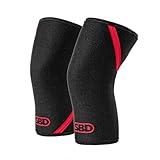
- 2. SBD 7mm Powerlifting Knee Sleeves — Best premium
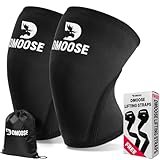
- 3. DMoose Fitness Knee Sleeves — Best for families
- 4. Iron Bull Strength 7mm Knee Sleeves — Best for beginners
- 5. AEOLOS Knee Sleeves (1 Pair) — Best for heavy use
- 6. Jupiter Knee Sleeves — Best budget pick
- How do you size powerlifting knee sleeves correctly?
- Does IPF approval matter if you never compete?
- What the listings leave out
- The verdict
- FAQ
The best powerlifting knee sleeves are the Gymreapers 7mm neoprene pair, because they combine IPF-approved construction with a storage bag and the second-strongest sales position in this set. If you compete and want a sleeve built to the maximum 30cm IPF length, the SBD 7mm pair is the better buy. Most shoppers compare thickness first, and that comparison is useless here: every one of these six sleeves is 7mm. Thickness is the spec the marketing leads with because it's the easiest number to print. What actually separates these six is how the brand tells you to measure yourself, whether you get one sleeve or two, and whether the pair is legal on a platform.
Best powerlifting knee sleeves at a glance
| Pick | Thickness | Pair count | Price |
|---|---|---|---|
Best overall Gymreapers Knee Sleeves |
7mm claim | 1 listed | Check Price |
Best premium SBD 7mm Powerlifting Knee Sleeves |
7mm claim | 2 listed | Check Price |
Best for families DMoose Fitness Knee Sleeves |
7mm claim | 5 listed | Check Price |
Best for beginners Iron Bull Strength 7mm Knee Sleeves |
7mm claim | 2 listed | Check Price |
Best for heavy use AEOLOS Knee Sleeves |
7mm claim | 1 listed | Check Price |
Best budget pick Jupiter Knee Sleeves |
7mm claim | 2 listed | Check Price |



How the six picks were scored, and on what
I weighted four things, in this order.
- Sizing information published on the listing, 40%. A 7mm sleeve that's one size too big does nothing. Two of these six publish an actual measurement method or a size chart with inch ranges. That's the single biggest separator in the set.
- Competition legality, 25%. Two listings state IPF approval or IPF specifications. If you ever step on a platform, this is a pass/fail filter, not a nice extra.
- Published construction detail, 20%. Reinforced or double-stitched seams, anti-slip lining, abrasion-resistant exterior. All claims from the brand, but a brand that describes its seams has at least committed to something in writing.
- What arrives in the box, 15%. Listed count runs from 1 to 5 across these six, and one includes a gym bag.
Why those weights? Because thickness, the spec everyone shops on, is identical across all six. Once you remove the variable that doesn't vary, sizing is what's left. Order the wrong size and no amount of neoprene grade saves the purchase.
What I cut: sleeves under 7mm, single-sleeve listings where the count wasn't clear, and anything whose category path put it outside knee braces or knee wraps. Note that the listed counts here are inconsistent between brands, so read the count on the page before you buy, since "1 Pair" in a title and "1" in the specification block don't always agree.
Why 7mm neoprene is not the deciding spec
Here's the trick with the best powerlifting knee sleeves: 7mm is a ceiling, not a grade. It's the thickest sleeve the IPF permits, so every serious brand builds to exactly that number and then stops. Comparing 7mm to 7mm tells you nothing about how a sleeve behaves under a heavy single.
What varies underneath the number:
- Neoprene density and stretch. Two 7mm sleeves can feel completely different. The listings describe theirs as "premium", "high-grade" and "heavy-duty", which are words, not measurements.
- Cut length. SBD's listing states 30cm, built to maximum IPF specification, and says that length prevents gapping during flexion. None of the other five publish a length.
- Taper and contour. DMoose describes an anatomically contoured shape. A straight tube and a contoured sleeve at the same thickness sit differently on a big calf.
- Grip lining. Iron Bull and DMoose both claim anti-slip inner surfaces. The other four don't mention it.
So when someone asks which of the best powerlifting knee sleeves is "thicker", the honest answer is none of them. Ask instead which one matches your leg. That question has a real answer, and it's on the size chart.
1. Gymreapers Knee Sleeves — Best overall
The one pick here that pairs stated IPF approval with a carry bag, and it sells faster than every other sleeve in this set except none.
Best for: lifters who want competition-legal support plus a bag to store it in Skip it if: you need a documented calf-based sizing method
This is the sleeve buyers pick most often out of the six, by a wide margin, and the listing gives you a reason why. It's IPF approved according to the title, which puts it on the short list for anyone entering a meet, and it ships with a gym bag, which nothing else here does. Sweaty neoprene in a gym bag is a real problem, and a dedicated pouch is a small, practical answer.
Gymreapers lists dimensions of 2 x 10 x 8 in and model GR0047. The 2-inch depth figure is the largest of the three listings that publish dimensions, which suggests a denser, less-collapsed sleeve in the packaging. Gymreapers says the 7mm neoprene delivers "powerful compression designed to stabilize the knees under heavy load", and describes reinforced stitching. Those are the brand's words, not a measured result.
The trade-off: this sits at the second-highest price position in the set, and the listing publishes no weight and no size chart with inch ranges. DMoose gives you both a five-step size chart and more pieces in the box for less money. You're paying for the approval and the bag.
Pros:
- IPF approved per the listing title
- Gym bag included, unique in this set
- Published dimensions of 2 x 10 x 8 in
- Reinforced stitching claimed by the brand
- The pick buyers choose most often here
Cons:
- Second-highest price position of the six
- No published weight figure
- No inch-range size chart on the listing
- Specification block lists a count of 1, so confirm what arrives
2. SBD 7mm Powerlifting Knee Sleeves — Best premium
The only pick that publishes a cut length and a two-point measuring method, which is exactly what competition lifters need before ordering.

Best for: competitive lifters measuring both knee and calf before ordering Skip it if: you want the widest published size range
SBD is the most expensive pick here and the one with the most specific documentation. The listing tells you to measure around the centre of your kneecap and around the thickest part of your calf with the leg straight and muscles relaxed. That two-point method matters, because a lifter with a 15-inch knee and a 17-inch calf needs different guidance than a chart based on knee circumference alone.
It also states 30cm length, built to maximum IPF specifications, and claims that length eliminates gapping through flexion. No other listing here publishes a length in centimetres. Made in Great Britain, per the title, and the brand describes reinforced seam construction with an abrasion-resistant exterior and a patented fit that maintains contact through the full range of motion.
Two real limits. The specification block shows Medium, so the size you want may be a separate listing to check. And SBD is the slowest seller of these six by a large margin, which tells you it's a specialist purchase rather than a general gym buy. For a lifter with no meet on the calendar, the money is hard to justify against the Gymreapers pair.
Pros:
- Publishes 30cm length to maximum IPF specification
- Two-point measuring method, knee and calf
- Count of 2 listed
- Abrasion-resistant exterior and reinforced seams claimed
- Made in Great Britain per the listing
Cons:
- Highest price position in this set
- Specification block shows Medium, not Large
- Slowest-selling pick of the six
- No published weight or packed dimensions
3. DMoose Fitness Knee Sleeves — Best for families
Five listed pieces and a published size chart running 11.8 to 18.3 inches, which makes this the easiest pick to fit more than one lifter.

Best for: training partners or households buying several sizes at once Skip it if: you only need one pair and nothing else
DMoose is the only listing in this set that publishes the whole size ladder in inches: Small 11.8 to 13.0, Medium 13.0 to 14.2, Large 14.2 to 15.7, X-Large 15.7 to 17.0, XX-Large 17.0 to 18.3. If two people in a house lift and neither knows their sleeve size, that chart does more work than any material claim on this page.
The listed count is 5, the highest here, and the weight is 0.88 lb, also the highest of the four listings that publish one. DMoose describes anatomically contoured sleeves with an anti-slip silicone lining that "won't slide, roll, or bunch", plus double-stitched seams. It's the mid price position, sitting between the two entry picks and the two premium ones.
Where it loses: the title mixes "Knee Sleeves" with 78-inch knee wraps, and the category path files it under knee wraps rather than knee braces, so read the page carefully to confirm which product configuration you're ordering. There's no IPF claim anywhere on the listing either. If you compete, that alone rules it out.
Pros:
- Full published size chart, 11.8 to 18.3 in
- Highest listed count in this set at 5
- Anti-slip silicone lining claimed
- Double-stitched seams claimed
- Mid price position, not the most expensive
Cons:
- No IPF approval claim
- Title mixes sleeves and 78-inch wraps
- Filed under knee wraps, so confirm the configuration
- Heaviest published weight at 0.88 lb
4. Iron Bull Strength 7mm Knee Sleeves — Best for beginners
A two-sleeve pair at a mid price with an anti-slip inner grip, and the listing spells out plainly why 7mm beats the 5mm sleeves most beginners buy first.

Best for: a first pair of sleeves for someone new to heavy squatting Skip it if: you plan to compete under IPF rules
If you've never owned sleeves, this listing explains the decision better than the rest. Iron Bull states directly that most sleeves are 5mm and theirs run 7mm for "deeper compression, more joint warmth, and better support under max load". That's the brand's claim, but it's the right framing for a first purchase, and it stops you buying a thin sleeve by accident.
Practically: count of 2, weight 0.84 lb, colour listed as Black/Charcoal, model ks. Iron Bull claims an anti-slip inner grip that "locks the sleeve in place through every squat rep" with no bunching between sets. Rolling sleeves are the number one complaint from new lifters, so a grip lining is worth having even as an unverified claim. It's the second-most-purchased sleeve here after the Gymreapers pair.
The gap is documentation. There's no size chart with inch ranges, no dimensions, and no IPF statement. For a beginner squatting in a commercial gym, none of that matters. The moment you enter a meet, it does, and you'll be buying again.
Pros:
- Count of 2 listed, a full pair
- Anti-slip inner grip claimed
- Mid price position, not entry-grade
- Published weight of 0.84 lb
- Second-strongest sales position in this set
Cons:
- No IPF approval claim
- No published size chart or dimensions
- Charcoal colourway only per the specifications
- Brand comparison to 5mm sleeves is marketing, not measurement
5. AEOLOS Knee Sleeves (1 Pair) — Best for heavy use
The lightest sleeve here at 7.83 oz and the slimmest packed depth at 1.57 in, which makes it the least intrusive option for lifters who wear sleeves every session.

Best for: lifters who want the least bulk under joggers or squat suits Skip it if: you want the thickest-feeling, densest sleeve here
AEOLOS publishes the most complete measurement set of any entry-priced pick here: 7.83 oz weight and 1.57 x 11 x 7.87 in dimensions. That weight is the lowest of the four listings with a published figure, and the 11-inch length is the longest. A long, light 7mm sleeve is a specific combination, and it suits someone who trains four or five times a week and wants sleeves that don't feel like a cast by the third set.
The brand describes it as "breathable, comfortable, and effective" with adaptive stabilisation for the knee and leg. Those are broad claims. The useful, checkable part is the numbers: second-cheapest of the six, longest published sleeve, lightest published weight.
The catch is that a lighter sleeve at the same 7mm probably means a less dense neoprene, and less density means less rebound out of the hole on a maximal squat. AEOLOS makes no IPF claim, publishes no size chart, and its specification block lists a count of 1 despite the title saying "1 Pair". It's also the second-slowest seller here. Read the page before ordering.
Pros:
- Lightest published weight in this set at 7.83 oz
- Longest published dimension at 11 in
- Second-cheapest pick of the six
- Full dimensions and weight both published
Cons:
- Count of 1 in the specifications versus "1 Pair" in the title
- Lighter weight at the same 7mm suggests less dense neoprene
- No IPF approval claim
- No published size chart
- Second-slowest seller of the six
6. Jupiter Knee Sleeves — Best budget pick
The cheapest of the six and still a listed pair of two, with a slim 0.55 in packed depth that makes it the easiest to stuff in a bag.
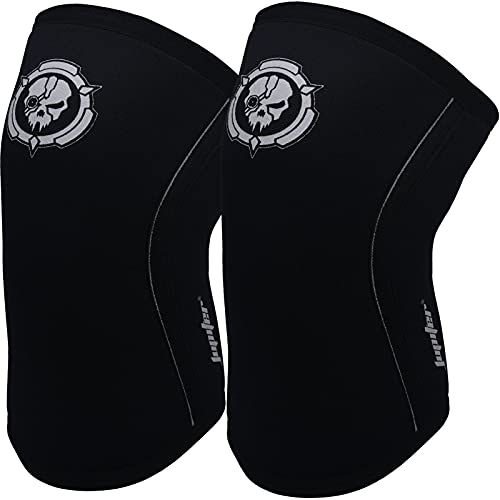
Best for: trying compression sleeves without committing much money Skip it if: you squat above intermediate loads and need rebound
Jupiter is the entry point. It's the cheapest pick here, the specification block lists a count of 2, and the weight is 0.62 lb with dimensions of 0.55 x 10.2 x 7.09 in. That 0.55 in depth is by far the slimmest packed figure in the set, which tells you these compress flat.
The brand positions them broadly, listing weightlifting, powerlifting and running as uses, and says the neoprene compresses the joint to promote blood flow for recovery. Jupiter also states the sleeves are washable and mentions a heavy-duty neoprene with a secure seam. The listing closes with an offer to help by email if there's an issue with the product, which is the closest thing to a stated support commitment on any of these six pages.
That breadth is also the weakness. A sleeve marketed for running as well as maximal squatting is not optimised for either. There's no IPF claim, no size chart, no model number, and it's the third-slowest seller of the six. Against the AEOLOS pair, which costs slightly more and publishes an 11-inch length, Jupiter gives up sleeve coverage. Buy these to find out whether you like squatting in sleeves, then upgrade.
Pros:
- Cheapest pick in this set
- Count of 2 listed
- Slimmest packed depth at 0.55 in
- Washable per the listing
- Stated willingness to resolve issues by email
Cons:
- No IPF approval claim
- No size chart or model number published
- Marketed across running and lifting, so optimised for neither
- Lightest listed pair weight at 0.62 lb, suggesting thinner-feeling neoprene
How do you size powerlifting knee sleeves correctly?
Two of these six listings tell you how. The rest expect you to guess, which is why sizing carries the most weight in my scoring.
The method SBD publishes is the one to use regardless of brand: with the leg straight and the muscles relaxed, measure around the centre of the kneecap, then measure the thickest part of the calf. If the calf measurement runs well above the knee measurement, the calf is what limits you, because a sleeve that clears the knee but strangles the calf will roll down or cut off circulation.
DMoose gives the size ladder in inches, and it's a useful reference even if you buy elsewhere:
- Small: 11.8 to 13.0 in
- Medium: 13.0 to 14.2 in
- Large: 14.2 to 15.7 in
- X-Large: 15.7 to 17.0 in
- XX-Large: 17.0 to 18.3 in
Note that those ranges overlap at the boundaries. Sitting on a boundary is the worst place to be. For maximal squats, most lifters size down at a boundary for more compression. For high-volume training days, size up.
Does IPF approval matter if you never compete?
Two of these six state IPF approval or IPF specification: the Gymreapers pair and the SBD pair. If you never enter a meet, the approval itself buys you nothing on the platform. It does buy you something else.
IPF rules cap sleeve thickness at 7mm and cap length at 30cm. A brand building to those limits is building to a known ceiling, which means the sleeve is as supportive as the governing body allows and no more. That's a useful constraint. It rules out the gimmick end of the market, where "extra thick" usually means a sleeve that bunches behind the knee at depth.
Skip the approval if:
- You never plan to compete and you'd rather put the money toward a size chart you trust
- Your calf sits at the top of a size range and you need the brand with the widest published ladder
- You're buying a first pair to test whether you even like squatting in compression
Prioritise it if there's a meet on your calendar in the next year, or if you want the reassurance that the specification was checked by somebody other than the brand.
What the listings leave out
Every one of these six pages is missing information you'd want. Naming the gaps is more useful than pretending they aren't there.
No warranty is published on any of the six. Not one listing states a warranty period. Jupiter mentions resolving issues by email, and that's the closest anyone gets. For a garment that stretches out under repeated load, that's a meaningful blank.
Neoprene density is never quantified. Every listing says 7mm. Not one states a durometer, a stretch percentage, or a panel construction. "Premium", "high-grade" and "heavy-duty" are the words used, and they aren't measurements.
Break-in period goes unmentioned. A competition-cut 7mm sleeve is genuinely hard to pull on when new. None of these listings warn you.
Count fields disagree with titles. The Gymreapers and AEOLOS specification blocks each list a count of 1 while the titles reference a pair, and DMoose lists 5 pieces against a title mentioning both sleeves and 78-inch wraps. Read the page, not the headline.
Only one seller lists each of these six. That means no seller comparison and no second source if the listing changes. Take a screenshot of the size chart when you order.
The verdict
The Gymreapers 7mm pair is the default recommendation among the best powerlifting knee sleeves, and the reason is convergence: it's the sleeve buyers here choose most often, it states IPF approval, it publishes dimensions of 2 x 10 x 8 in, and it includes a bag no other pick offers. When the popularity signal and the specification sheet agree, that's the pick to start with.
Two conditions flip it.
Condition one: your calf measures more than an inch and a half above your knee. Then buy the SBD pair. It's the only listing that tells you to measure both points before ordering, and the only one publishing a 30cm cut length built to the maximum IPF specification. That length is what prevents gapping when the knee bends past parallel, and it's the difference between a sleeve that works at depth and one that doesn't.
Condition two: you're buying for two or more lifters. Then buy the DMoose set. Five listed pieces, a size ladder published from 11.8 to 18.3 inches, and a mid price position. Nothing else here lets you fit multiple people from one page with any confidence.
The runner-up's exact advantage over the winner is documentation. SBD publishes a length and a measuring method; Gymreapers publishes neither. If you already know your size, that advantage evaporates and the winner wins on price position and the included bag.
FAQ
Are expensive powerlifting knee sleeves worth the extra money?
Expensive powerlifting knee sleeves are worth it in one specific case: when the premium buys documentation you'll actually use. SBD sits at the top price position here and publishes a 30cm cut length plus a two-point measuring method. Gymreapers costs less and states IPF approval. If you already know your measurements, the cheaper approved pair does the same job on the platform.
What is the best value pick among these knee sleeves?
The best value pick is the Iron Bull pair. It's the mid price position, the specification block lists a count of 2, the published weight is 0.84 lb, and the brand claims an anti-slip inner grip. You get a full pair and a stated grip lining without paying either premium price. Only the missing IPF claim holds it back from the top spot.
Is 7mm thickness always better than 5mm for squats?
7mm thickness is the IPF maximum, and all six picks here run it. Iron Bull states most sleeves are 5mm and theirs run thicker for deeper compression and more joint warmth. For maximal squats, more neoprene generally means more rebound out of the bottom. For high-volume or conditioning work, 5mm is easier to wear and quicker to pull on.
Gymreapers or SBD: which pair should I buy?
Gymreapers or SBD comes down to whether you know your size. Gymreapers states IPF approval, includes a gym bag, publishes 2 x 10 x 8 in dimensions, and costs less. SBD publishes the 30cm length, the two-point knee-and-calf measuring method, and abrasion-resistant seam construction. Buy SBD if your calf is disproportionately large. Buy Gymreapers otherwise.
What mistake do first-time knee sleeve buyers make?
The mistake first-time buyers make is shopping on thickness instead of fit. Every sleeve here is 7mm, so the number tells you nothing. Buyers then order a size based on trouser size or a guess, get a sleeve that rolls at the calf, and blame the brand. Measure your kneecap circumference and your thickest calf point before you order anything.
Measure both legs before you open a single listing, because knee and calf circumference is the one variable that decides whether any of these six works for you. Write the two numbers down, then match them to the DMoose ladder, which runs 11.8 to 18.3 inches and is the most complete chart published across this set. If you land mid-range and you plan to squat heavy, the Gymreapers pair is the sensible default: approved construction, a bag to keep the neoprene out of your gear, and the strongest buying pattern of anything here. It's the pick that asks least of you before it works.