Best Lifting Belt for Knee Pain: Gymreapers Leads

A belt braces your trunk, not your knees. Six picks compared on width, thickness and closure type, with a clear split between what a belt fixes and what a sleeve or wrap fixes.

By Christopher CarrUpdated 16 min read
On this page
- Best lifting belt for knee pain at a glance
- Why a belt won't fix your knees
- The criteria I ranked on, and why those three
- 1. Gymreapers Leather Weightlifting Belt for Bodybuilding — Best overall
- 2. DMoose Fitness Weight Lifting Belt for Squats — Runner-up
- 3. CAMBIVO 2 Pack Knee Braces for Women & Men — Best for heavy use
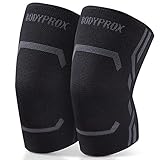
- 4. Bodyprox Knee Compression Sleeve for Men and Women — Best budget pick
- 5. Gymreapers Knee Wraps — Best for beginners
- 6. ProFitness Knee Sleeve for Women & Men — Best for families
- Sleeve, wrap or belt: which do you actually need?
- How do you size a lifting belt for knee pain?
- What the listings leave out
- The verdict
- FAQ
The best lifting belt for knee pain is the Gymreapers Leather Weightlifting Belt, a 4-inch leather belt weighing 1.19 lb that stiffens your trunk so your squat pattern stops collapsing forward. If your pain sits in the joint itself rather than your lower back, the CAMBIVO knee sleeves are the better buy, at 7.76 oz for the pair. Get this choice wrong and you spend money on a rigid waist belt while your knees keep aching, because a belt has never touched a knee. That's the trap this whole search term sets.
Best lifting belt for knee pain at a glance
| Pick | Support width / thickness | Closure or fit | Price |
|---|---|---|---|
Best overall Gymreapers Leather Weightlifting Belt |
4 in wide back | Adjustable buckle | Check Price |
Runner-up DMoose Fitness Weight Lifting Belt |
6 in back, 0.375 in foam core claim | Hook-and-loop auto lock | Check Price |
Best for heavy use CAMBIVO 2 Pack Knee Braces |
Knit compression sleeve | Pull-on, silicone grip rings claim | Check Price |
Best budget pick Bodyprox Knee Compression Sleeve |
Knit compression sleeve | Pull-on, size Medium | Check Price |
Best for beginners Gymreapers Knee Wraps |
72 in wrap length | Wrapped, strap included | Check Price |
Best for families ProFitness Knee Sleeve |
7 mm neoprene claim | Pull-on, size Medium | Check Price |




Why a belt won't fix your knees
Here's the thing nobody selling you a belt wants to say plainly. A weightlifting belt wraps your waist. It gives your abdominal wall something to brace against, which stiffens your midsection and helps you keep a more upright torso under load. That is the whole mechanism. It never contacts the knee.
So when you search for the best lifting belt for knee pain, the honest answer splits in two directions. Amazon's results split the same way, and that's why this set contains two belts and four knee products rather than six belts.
The indirect case for a belt is real but limited. If your squat breaks down and your hips shoot back, your knee travel and loading pattern change with it. A stiffer trunk can help you hold position. That's a form argument, not a pain treatment, and I'm not going to dress it up as one.
The direct case sits with sleeves and wraps. Those go on the joint, add compression, and are the products in this set whose listings actually mention knee pain relief. If your knees hurt, start there.
None of the six products in this set is claimed to treat a knee condition, and I'm not claiming it either. Persistent joint pain is a conversation with a clinician, not a purchase.
The criteria I ranked on, and why those three
I compared the published specifications side by side and ranked on three things, weighted in this order.
- Support geometry, weighted heaviest. Width and thickness are what a support product actually does. A 4-inch leather back panel, a stated 6-inch back, a 72-inch wrap length, a 7 mm neoprene claim: these are comparable numbers you can reason about.
- Closure and fit security, weighted second. A support that slides down mid-set does nothing. Buckle, hook-and-loop, wrap tension and grip rings all change how the product behaves on rep eight.
- How much the listing publishes, weighted last but not ignored. A pick with weight, dimensions, model number and material listed is a pick you can evaluate before it arrives.
Why those three? Because they're the only things every listing in this set gives me in comparable form. Material matters, so it's inside criterion one. Anything about durability over a year, or how a sleeve feels on month six, is not in the data.
Two products were pushed down for thin specification sheets. ProFitness publishes only size, colour and count, with no weight and no dimensions. Gymreapers Knee Wraps publish no dimensions beyond the 72-inch length in the title. That's a real cost when you're buying sight unseen.
1. Gymreapers Leather Weightlifting Belt for Bodybuilding — Best overall
The one genuine lifting belt here worth building a squat around, with a 4-inch leather back panel and a buckle that holds a fixed setting.
Best for: lifters who want one durable trunk belt for squats and deadlifts Skip it if: your pain is in the knee joint and nowhere near your spine
This is the pick that answers the belt half of the question properly. The listed dimensions are 0.04 x 28 x 4 in, and the whole belt weighs 1.19 lb. Four inches of width across the back is the standard powerlifting geometry, and the thin profile means it sits closer to your body than a bulky nylon belt does.
Gymreapers says the leather doesn't rip or tear like belts made from fake leather, plastic, nylon or velcro, and describes the belt as form-fitting rather than bulky. Those are the brand's words, not measured results. What I can verify is that this is the only real leather belt in the set, and the only one with a buckle rather than a hook-and-loop strap. A buckle holds a repeatable tightness, which matters if you want the same brace on every working set.
It's also the most expensive pick here and the only one that touches your knees not at all. That's the trade-off: best-in-set trunk support, zero joint compression, and you may well need a second purchase.
Pros:
- Only real leather belt in this set
- 4-inch back panel, standard squat geometry
- Buckle holds a repeatable tightness setting
- Light for a leather belt at 1.19 lb
- Full dimensions and model number published
Cons:
- Does nothing directly for knee pain
- The most expensive pick here
- Buckle is slower to adjust than hook-and-loop
- Only one seller lists it
2. DMoose Fitness Weight Lifting Belt for Squats — Runner-up
A neoprene belt with a stated 6-inch back panel and a hook-and-loop lock, which is the fastest belt here to get on and off.

Best for: anyone who hates threading a buckle between sets Skip it if: you want stiff, rigid bracing from thick leather
The second belt in this set trades material for convenience. DMoose lists it as neoprene and nylon with a 6-inch wide back support and a 0.375-inch breathable foam core. Wider than the Gymreapers, softer, and it fastens with a hook-and-loop closure the brand calls an advanced locking mechanism.
That closure is the actual reason to pick this one. You slap it on, pull it tight, done. If you're circuit-training or moving between exercises, that speed is worth something a buckle can't match.
The catch with hook-and-loop belts is that the tightness you get is whatever your hands managed that rep, not a numbered setting you can return to. Loop material also wears with use, and the listing publishes no warranty to cover that. The dimensions given, 0.04 x 6 x 6 in, describe the panel rather than the full belt length, so you're relying on the size chart rather than a measured strap.
Like the Gymreapers, it's a trunk product. It supports your midsection during squats. It sits nowhere near your knee.
Pros:
- Widest stated back support here at 6 inches
- Fastest closure in the set to fasten and release
- Foam core claim of 0.375 in adds cushioning
- Roughly mid-range for this set on price
Cons:
- Hook-and-loop can't hold a repeatable tension setting
- No published warranty on the closure
- Total belt weight not listed
- Neoprene flexes more than leather under heavy load
3. CAMBIVO 2 Pack Knee Braces for Women & Men — Best for heavy use
The best-documented knee product here, with silicone grip rings aimed squarely at sleeves that slide down mid-session.

Best for: high-volume training where sleeves slide down mid-set Skip it if: you want thick neoprene rather than thin knit fabric
If your knees are the problem, this is where I'd start. CAMBIVO publishes more than any other knee pick here: 7.76 oz for the pair, dimensions of 1.18 x 10.6 x 7.09 in, model NS10, and a Medium size. Two sleeves in the box.
The feature that separates it inside this set is the double-lined anti-slip silicone grip rings CAMBIVO says sit at the top of each sleeve to stop them sliding down during exercise. Nobody else in this group makes that claim. Anyone who's done five sets of walking lunges and spent the last two hitching a sleeve back up knows why it matters. CAMBIVO also describes 3D knitting technology for stable pressure and thin four-dimensional stretch yarn for breathability. Those are the brand's descriptions.
It's the second-cheapest pick here, which makes the specification sheet even more surprising. The trade-off is thickness. CAMBIVO markets breathable, thin, flexible fabric, while ProFitness markets 7 mm neoprene. Thin knit is comfortable for long sessions and worse at heavy-squat bracing.
Pros:
- Silicone grip rings claim, unique in this set
- Fullest specification sheet of any knee pick here
- Two sleeves included, 7.76 oz for the pair
- Second-cheapest pick in the group
- Breathable knit suits long training sessions
Cons:
- Thin fabric, not a thick neoprene squat sleeve
- Sizing is single-size Medium, no range shown
- All compression benefits are brand claims, not measured
- Not a substitute for trunk support under a heavy bar
4. Bodyprox Knee Compression Sleeve for Men and Women — Best budget pick
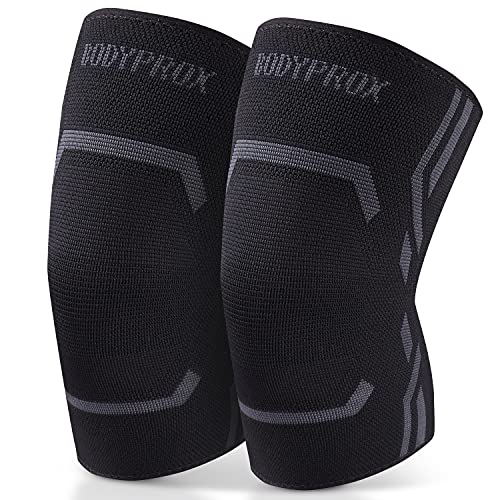
The cheapest way into knee compression here, at 6 oz for two sleeves, and the fastest-selling product in the whole set.
Best for: spending the least while covering both knees Skip it if: you need a squat sleeve with real thickness behind it
Cheapest of the six and the one buyers choose most often here by a wide margin. That combination is why it's in the guide. You get two sleeves, size Medium, black, 6 oz for the pair, model BP-KneeSleeve.
Six ounces makes this the lightest knee product in the set, lighter even than the CAMBIVO pair. That tells you something about the fabric: it's built for sustained wear rather than maximum bracing. Bodyprox frames it around prevention, saying the sleeves help minimise pain and inflammation when fluid builds up in the joints from excessive pressure and stress, and that compression increases blood flow. Manufacturer claims, all of them, and worth reading as marketing rather than clinical evidence.
Where it loses to CAMBIVO is documentation and grip. No dimensions listed and no anti-slip feature mentioned, so a sleeve this light may well travel down your leg on high-rep work. Where it wins is simple: it costs the least of anything here, and if you're not sure compression helps you at all, this is the cheapest way to find out before spending more.
Pros:
- Cheapest pick in this comparison
- Sells faster than anything else in this set
- Lightest knee option at 6 oz per pair
- Two sleeves included
- Model number and weight published
Cons:
- No anti-slip grip feature listed
- No dimensions published
- Too thin for heavy squat bracing
- Prevention claims are the brand's, not verified
5. Gymreapers Knee Wraps — Best for beginners
Wraps rather than sleeves, so you set the tension yourself across 72 inches of elastic, which is a skill worth learning early.

Best for: heavy squat days where you want adjustable wrap tension Skip it if: you want something you can pull on in five seconds
Wraps are a different tool from sleeves, and this is the only pair here. Each wrap runs 72 inches long, the pair weighs 0.77 lb, and a strap is included. One size, pink.
The advantage is control. A sleeve gives you whatever compression the fabric provides. With 72 inches of elastic you choose the tightness, wrap by wrap, and you can go looser on a warm-up and tighter on a top set. Gymreapers says the wraps boost leg strength, support and stability during squats and leg presses, and protect the knee joint with added compression. Their claims, again, but the mechanism of adjustable tension is real and it's why powerlifters use wraps at all.
The cost is time and technique. Wrapping both knees properly takes a minute or two, and doing it badly means uneven pressure or a wrap that unrolls mid-rep. This is also the slowest seller of the six by a long way, and the listing publishes no dimensions beyond the 72-inch length. Pink is the only colour shown.
Pros:
- 72-inch length lets you set tension per set
- Strap included for storage
- Only wrap-style option in this comparison
- Lighter than the leather belt at 0.77 lb
Cons:
- Slowest seller of the six
- Takes real practice to wrap evenly
- Slow to apply between exercises
- Only pink shown, one size fits all
6. ProFitness Knee Sleeve for Women & Men — Best for families
Thick 7 mm neoprene by the brand's own claim, sold as a pair, but the thinnest specification sheet in the set.

Best for: two lifters in a house who want thick neoprene sleeves Skip it if: you want published weight and dimension figures before buying
ProFitness sits at the opposite end of the sleeve spectrum from Bodyprox. The brand describes 7 mm neoprene built with extra-strong nylon thread and heavy-duty construction, and says the sleeves stay put through rigorous sets of squats, lunges and deadlifts. Seven millimetres is the thickness serious squatters usually look for, and it's the only pick here claiming that number.
Sold as a pair in Medium, black and red. Because you get two sleeves in one purchase, a household with two lifters of similar knee circumference can split them and each brace their working leg, or one person keeps both.
Here's what holds it back. The listing publishes size, colour and count. That's it. No weight, no dimensions, no model number, so the 7 mm figure is the brand's own description with nothing else to cross-check it against. Compare that to CAMBIVO, which lists weight, dimensions and a model number for less money. ProFitness also carries a premium price position in this set without publishing more capability than the cheaper sleeves do.
Pros:
- Thickest neoprene claim in this set at 7 mm
- Two sleeves included in one purchase
- Anti-slip claim aimed at squats and lunges
- Only pick offered in a two-tone colourway
Cons:
- Thinnest specification sheet of all six
- No published weight or dimensions
- Premium price position without extra published capability
- Slowest-selling of the two entry-priced sleeve alternatives
- Thick neoprene runs hot on long sessions
Sleeve, wrap or belt: which do you actually need?
Three product types, three jobs. Match the job to your problem and the shopping gets simple.
- A belt stiffens your trunk. Pick one if your squat form breaks down under load or your lower back is the complaint. The Gymreapers B1 and the DMoose belt are your two options here.
- A sleeve applies constant compression to the joint and you pull it on once. Pick one if you want something you can forget about for a whole session. CAMBIVO, Bodyprox and ProFitness all sit here.
- A wrap gives you adjustable compression you set per set. Pick it if you're only bracing for heavy squats and don't mind the setup time. Only the Gymreapers Knee Wraps qualify.
Four of the six picks in this group are knee products and two are belts. That ratio is the honest shape of the best lifting belt for knee pain question: most of what helps a knee isn't a belt.
Can you use both? Yes, and plenty of lifters do. A belt for trunk bracing and sleeves for the joints are complementary, not competing. If budget forces a single purchase and your knees are what hurt, buy the knee product.
How do you size a lifting belt for knee pain?
Sizing is where most of these purchases go wrong, and belts and sleeves go wrong differently.
For belts, you measure your natural waist where the belt will actually sit, which is above the hip bones and below the ribs, not your trouser size. Both belts here list Medium in this configuration. Gymreapers publishes a 28-inch strap length in its dimensions, which gives you something concrete to check against your own measurement. DMoose lists panel dimensions rather than strap length, so you're leaning on the brand's chart.
For sleeves, you measure knee circumference. CAMBIVO, Bodyprox and ProFitness are all Medium in the versions listed here, and none publishes a circumference range in the specifications I was given. That's a gap worth checking on the live listing before you order.
The Gymreapers wraps sidestep this entirely at one size, because 72 inches of elastic accommodates most legs. Adjustability is the whole point of a wrap.
What the listings leave out
Six listings, and here's what none of them tells you.
Warranty. Not one of these six products publishes a warranty term. If long-term coverage is a factor, you'll need to check the live listing or the brand directly.
Knee circumference ranges. Three sleeves, all Medium, no stated fit range in the data. Sizing charts live on the listing pages.
Sleeve thickness in millimetres for two of three. ProFitness claims 7 mm. CAMBIVO and Bodyprox describe fabric qualities without a thickness figure, so you can't line all three up on the same scale.
Break-in behaviour. Leather belts stiffen and soften over time. Nothing in the Gymreapers data addresses how long that takes.
Anything clinical. These are fitness products with fitness marketing. Statements about swelling, inflammation and circulation are the manufacturers' descriptions of their own goods. Treat them as such, and take real knee pain to someone qualified to assess it.
The verdict
Three tiers, three answers.
At the entry end, the Bodyprox sleeves and the CAMBIVO sleeves both cover two knees for the least money in this set. Between them, CAMBIVO wins on documentation and on the silicone grip ring claim, while Bodyprox wins on price alone and is the fastest seller here. If your budget is the binding constraint and your knees are the complaint, CAMBIVO is the smarter of the two cheap options.
In the middle, the DMoose belt and the Gymreapers wraps do completely different jobs. The DMoose belt is a fast-fastening 6-inch trunk brace. The wraps give you 72 inches of adjustable knee compression. Buy according to which end of your body is complaining.
At the premium end, the Gymreapers B1 leather belt is the pick I'd default to, because a 4-inch leather back panel with a buckle is the most durable and most repeatable trunk support in this comparison. ProFitness sits at the same price position with a 7 mm neoprene claim and almost no published specifications, which is a harder purchase to justify.
The cutoff is simple. Knee joint pain sends you to CAMBIVO. Trunk and lower-back instability under load sends you to the Gymreapers belt.
FAQ
Is a lifting belt worth it if my knees hurt?
A lifting belt is worth it only if your problem includes trunk instability, not if the pain is purely in the knee joint. Belts wrap your waist and never contact the knee. The Gymreapers B1 with its 4-inch leather back panel can help you hold squat position under load, which changes how your knees are loaded. For direct joint compression, buy a sleeve.
Which offers better value, the cheapest sleeve or a leather belt?
The cheapest sleeve offers better value for most people searching this, because the Bodyprox pair covers two knees for the lowest outlay in this set while the Gymreapers belt is the most expensive pick and touches neither knee. Spend the smaller amount first, see whether compression helps you, and add trunk support later if your form is the real issue.
What specification matters most in the best lifting belt for knee pain?
The specification that matters most is support width. On belts, that's the back panel: 4 inches on the Gymreapers, a stated 6 inches on the DMoose. On sleeves, it's material thickness, where ProFitness claims 7 mm neoprene against CAMBIVO's thin knit. Width and thickness determine how much bracing the product delivers, more than any other listed figure.
CAMBIVO or ProFitness: which knee sleeve should I choose?
CAMBIVO or ProFitness comes down to fabric versus documentation. ProFitness claims thicker 7 mm neoprene, better suited to heavy squats. CAMBIVO publishes 7.76 oz, dimensions of 1.18 x 10.6 x 7.09 in, a model number, and silicone grip rings to stop slipping, for less money. I'd take CAMBIVO unless you specifically want maximum neoprene thickness.
What mistake do people make buying knee support for lifting?
The mistake people make is buying a waist belt when the knee is what hurts. Search results for the best lifting belt for knee pain mix belts with sleeves and wraps, and the two categories do unrelated jobs. The second mistake is buying a thin sleeve for heavy squats. Match the product thickness to the load you're actually lifting.
Start by naming where it hurts. Knee joint pain points you at the CAMBIVO sleeves, which publish more than any other knee pick here and add grip rings to keep them in place through high-rep work. Squat form collapsing under load points you at the Gymreapers B1, a 4-inch leather belt at 1.19 lb that holds a repeatable buckle setting instead of whatever your hands managed that rep. That repeatability is the quiet reason it's my default: the same brace, every set, for years. And if the pain is persistent rather than occasional, book the appointment before you buy anything.