Best Vegan Lion's Mane Supplement: NutraHarmony Wins

Seven lion's mane capsule bottles, compared on the numbers their listings actually publish: dose per serving, count per bottle, extract type, and which ones state a plant-based capsule shell in writing.

By Christopher CarrUpdated 18 min read
On this page
- Best vegan lions mane supplement at a glance
- How I screened this category down to seven bottles
- Which of these state a vegan capsule in writing?
- Milligrams or extract type: what actually decides a best vegan lions mane supplement?
- 1. NUTRAHARMONY Lions Mane Supplement Capsules — Best overall
- 2. Real Mushrooms Lion's Mane Capsules — Best premium
- 3. Double Wood Supplements Organic Lion's Mane Mushroom — Best large-capacity
- 4. Sports Research® Organic Lion's Mane 1800mg — Runner-up
- 5. Garden of Herbz Lion's Mane Mushroom Brain Supplement — Best for heavy use
- 6. Swanson Lion's Mane Mushroom — Best budget pick
- 7. Nature's Truth Lions Mane Supplement Capsules — Best for beginners
- How long does one bottle actually last?
- What the listings do not tell you
- The verdict
- FAQ
The best vegan lions mane supplement here is the NutraHarmony 120-count bottle, which pairs a stated 1200 mg fruiting-body dose with a plant-based capsule shell named right in the product title. If you want the extract type verified by an outside lab instead, Real Mushrooms publishes greater than 30% beta-glucans per capsule and uses fruiting bodies only. Most shoppers compare milligrams first. That figure tells you less than you think, because 1200 mg of one powder is not 1200 mg of another.
Best vegan lions mane supplement at a glance
| Pick | Dose per serving | Bottle size | Price |
|---|---|---|---|
Best overall NUTRAHARMONY Lions Mane Supplement Capsules |
1200 mg 25% polysaccharides claim |
120 count | Check Price |
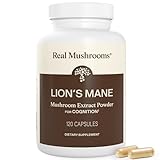
Best premium Real Mushrooms Lion's Mane Capsules |
2 capsules daily >30% beta-glucans claim |
120 count | Check Price |
Best large-capacity Double Wood Organic Lion's Mane Mushroom |
1,000 mg | 120 count | Check Price |
| 1800 mg | 90 count | Check Price | |
Best for heavy use Garden of Herbz Lion's Mane Mushroom |
10:1 extract blend with turkey tail |
120 count | Check Price |
Best budget pick Swanson Lion's Mane Mushroom |
500 mg | 60 count | Check Price |
Best for beginners Nature's Truth Lions Mane Capsules |
with BioPerine | 50 count | Check Price |



How I screened this category down to seven bottles
I started from the mushroom shelf of herbal supplements and worked only from what each listing publishes. No guesses, no filling in blanks from what a brand usually does.
Three data points did the screening work:
- A stated dose or extract ratio. Five of the seven publish one: 1200 mg, 1800 mg, 1,000 mg, 500 mg, or a 10:1 blend.
- A stated capsule material. Four of the seven say vegan, veggie or plant-based somewhere in the title or the bullets.
- A stated extract source. Two say fruiting body explicitly, and one of those says fruiting bodies only, no mycelium on grain.
What got cut was anything with none of the three. A bottle that lists a count and nothing else gives a shopper no basis for comparison.
Here is the honest limitation of the exercise. Amazon's search for a best vegan lions mane supplement does not filter on capsule material, so the results it returns are lion's mane bottles, some of which happen to state a plant-based shell and some of which do not. I have separated those two groups in the next section rather than pretending the whole field qualifies. Nobody should have to read a bullet list twice to work out whether the shell is gelatin.
Which of these state a vegan capsule in writing?
Four listings say it. Three do not, and that is the whole story of this category.
- NutraHarmony puts "120 Vegan Caps" in the product title.
- Sports Research says "90 Veggie Capsules" in the title and "Vegan, Non-GMO, and Gluten-Free" in the bullets.
- Real Mushrooms states the capsules are "gluten-free, non-GMO, & vegan".
- Garden of Herbz states "Vegan & Non-GMO Capsules" and "Formulated with plant-based capsules".
- Swanson carries "60 Vegan Capsules" in its full title, which puts it in the stated group too.
- Nature's Truth has a bullet headed "Vegan capsules", though the sentence under it only says the capsule provides lion's mane mushroom.
- Double Wood publishes no capsule material at all in the data I have. Its bullets cover immune support, cellular wellness, two months of supply and third-party testing. Nothing about the shell.
So the split is uneven rather than clean. Five state it plainly, one implies it in a bullet heading, one says nothing. For a strict plant-based diet that gap matters more than any milligram figure, because a capsule shell is either bovine gelatin or it is not, and no dose makes up for the wrong answer.
My advice is blunt. If the shell is non-negotiable for you, buy from the group that says it in the title, and check the supplement facts panel image on the listing before you commit. Titles get edited. Panels get photographed.
Milligrams or extract type: what actually decides a best vegan lions mane supplement?
The milligram number is the first thing every buyer reads and the least comparable thing on the label. Sports Research publishes 1800 mg, NutraHarmony 1200 mg, Double Wood 1,000 mg, Swanson 500 mg. Ranked that way, the order looks obvious.
It is not, and here is why. Those figures describe different things depending on what went in the capsule. Lion's mane sold as an extract concentrates the material; lion's mane sold as whole powder does not. Garden of Herbz states a 10:1 extract blend and never publishes a milligram figure at all, which makes its dose impossible to slot into that ranking.
The comparable numbers are the ones that describe active compounds:
- Real Mushrooms claims greater than 30% beta-glucans per capsule, verified by third-party labs.
- NutraHarmony claims standardisation to 25% polysaccharides.
- The other five publish neither figure.
Beta-glucans and polysaccharides are not the same measurement, so those two numbers do not stack against each other directly. Polysaccharides is the broader bucket, and starch from grain counts inside it. Beta-glucans is the narrower, harder measure. That distinction is exactly what Real Mushrooms leans on when it says its capsules contain "no starch, grains, or mycelium".
The real deciding criterion for the best vegan lions mane supplement is what the powder is, followed by whether an outside lab measured it. Dose comes third. A high milligram figure on unmeasured mycelium is a big number describing very little.
1. NUTRAHARMONY Lions Mane Supplement Capsules — Best overall
The only pick that pairs a named fruiting-body source, a standardisation figure and a vegan capsule in the title, at the third-cheapest price in this set.
Best for: a daily user who wants a stated dose, a stated extract type and a stated vegan capsule. Skip it if: you want beta-glucans measured rather than polysaccharides.
Three claims sit on this listing that most of the field does not attempt together. NutraHarmony states 1200 mg per capsule, says the material is fruiting body rather than mycelium, and says the shell is vegan right in the product title. It also claims standardisation to 25% polysaccharides.
That combination is what wins it. Real Mushrooms publishes a stronger measurement, and Sports Research publishes a bigger dose, but neither of them gives you all four data points, and both cost more. NutraHarmony sits third of seven on price and sells faster than four of the others here, which suggests the value case reads clearly on the page.
The 120-count bottle at one capsule per serving is straightforward arithmetic: four months if you take it daily. Compare that to the 90-count Sports Research bottle at a higher price position.
The trade-off is the measurement itself. Polysaccharides at 25% is a looser standard than beta-glucans at 30%, and NutraHarmony names no third-party lab. You are trusting the brand's own figure. Only two sellers list it, which narrows your options if one goes out of stock.
Pros:
- Vegan capsule stated in the product title
- 1200 mg per capsule, one of the higher published doses
- Fruiting body named, not mycelium
- 25% polysaccharides standardisation claim
- Third-cheapest of the seven picks
Cons:
- Polysaccharides is a looser measure than beta-glucans
- No third-party lab named for the standardisation claim
- No weight or dimensions published
- Only two sellers stock it
2. Real Mushrooms Lion's Mane Capsules — Best premium
The only bottle here with a third-party-verified beta-glucan figure and an explicit no-mycelium claim.
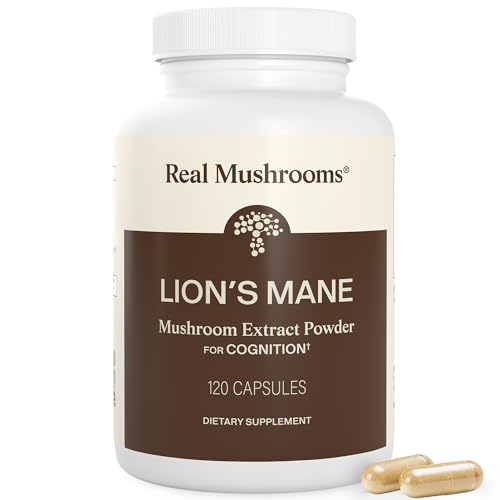
Best for: someone who cares that the powder is fruiting body only, verified by an outside lab. Skip it if: you want the most milligrams per serving.
This is the most expensive pick here and the one buyers choose most often in this set. Both of those facts point at the same thing: the listing makes a harder claim than the others and shoppers respond to it.
The claim is greater than 30% beta-glucans per capsule, verified by third-party labs. Real Mushrooms also says its capsules are made from 100% mushrooms, fruiting bodies, "not mycelium grown on grain like most brands", with no starch or grains. That is the single most specific sourcing statement in this group, and it is the reason a premium price position is defensible rather than decorative.
Serving size is two capsules daily, so the 120-count bottle runs two months. That halves the effective bottle life against NutraHarmony's one-a-day format and widens the price gap further than the shelf figure suggests. The listing also invites you to open the capsules into food or a drink, which the others do not mention.
At 2.35 oz and 6.75 x 4.25 x 2 in, it is the bulkiest bottle here by published dimensions.
Pros:
- Greater than 30% beta-glucans, third-party verified claim
- Fruiting bodies only, no mycelium on grain
- Says gluten-free, non-GMO and vegan
- Capsules can be opened into food or drink
Cons:
- Most expensive pick in this set
- Two capsules per serving, so 120 count lasts two months
- No milligram figure published per capsule
- Largest published bottle dimensions of the seven
3. Double Wood Supplements Organic Lion's Mane Mushroom — Best large-capacity
A 120-capsule bottle at 1,000 mg with third-party testing claimed, held back by silence on the capsule shell.

Best for: a first-time buyer who wants two months in one bottle at a middling price. Skip it if: you want extract ratio and beta-glucan content published.
Double Wood sells faster than five of the seven picks here, and the reason is easy to see. You get 120 capsules at 1,000 mg, a stated two-month supply, manufacturing and testing in the USA from globally sourced ingredients, and rigorous third-party testing claimed in the bullets. The price sits fourth of seven, so nothing about it is extreme.
What it does not publish is the part that matters for this article. There is no capsule material anywhere in the data I have, no extract ratio, no beta-glucan or polysaccharide percentage, and no statement of whether the powder is fruiting body or mycelium. The bullets talk about immune defense and cellular wellness instead.
That makes it the hardest pick to place in a plant-based guide. It is a solid generalist lion's mane bottle with a clean spec sheet on the basics: 0.5 g listed weight, 3.1 x 1.5 x 2 in, model DWLMM. Check the supplement facts panel image yourself before you buy, because the answer is probably on the bottle even though it is not in the bullets.
Pros:
- 120 capsules at 1,000 mg, stated two-month supply
- Third-party testing claimed
- Manufactured and tested in the USA
- Mid-range price, fourth-cheapest of seven
Cons:
- No capsule material published in the listing data
- No extract ratio or beta-glucan figure
- Does not say fruiting body or mycelium
- Bullets emphasise immune claims over cognitive specifics
4. Sports Research® Organic Lion's Mane 1800mg — Runner-up
The highest published milligram figure of the seven, in a one-a-day veggie capsule with no fillers claimed.

Best for: someone chasing the highest published milligram figure in a one-a-day format. Skip it if: you want the longest-lasting bottle.
At 1800 mg of organic lion's mane extract per serving, this is the biggest published dose in the set, half again as much as NutraHarmony's 1200 mg. The listing says the capsules are vegan, non-GMO and gluten-free, made in cGMP facilities, with "no fillers or artificial additives". For a reader who wants one capsule, a big number and a plant-based shell, the case is short and clear.
Two things keep it out of first place. The bottle holds 90 capsules, the smallest of the four 120-count-or-more picks, while sitting in the most expensive price tier. And there is no beta-glucan or polysaccharide percentage anywhere, so that 1800 mg has no active-compound figure attached to it. A bigger unqualified number is still an unqualified number.
It is also the slowest seller of the top four here, which usually says more about how long a listing has been live than about the product. Published dimensions are 3.7 x 2.6 x 2.6 in. No weight is given.
Pros:
- 1800 mg per serving, highest published dose here
- Vegan, non-GMO and gluten-free stated
- One capsule per serving
- Claims no fillers or artificial additives
Cons:
- 90 count, the smallest bottle among the higher-dose picks
- Premium price tier for a shorter-lasting bottle
- No beta-glucan or polysaccharide figure published
- Does not state fruiting body or mycelium
5. Garden of Herbz Lion's Mane Mushroom Brain Supplement — Best for heavy use
A 10:1 extract blend with turkey tail added, plant-based capsules stated, and no milligram figure to compare.

Best for: a buyer who wants turkey tail alongside lion's mane in one capsule. Skip it if: you want lion's mane on its own with a stated milligram figure.
This is the only pick that is not lion's mane alone. Garden of Herbz combines lion's mane with turkey tail and states a 10:1 mushroom extract blend, with clearly listed ingredients and "no proprietary blends, fillers, or artificial additives". That last point is worth something, because a blend with hidden ratios is the classic way to hide a small amount of the expensive ingredient.
The capsule claim is explicit and doubled: "Vegan & Non-GMO Capsules" and "Formulated with plant-based capsules", free from GMOs, gluten, dairy and soy. Third-party lab tested, made in a GMP-compliant facility in the USA. For a plant-based shopper, that box is firmly ticked.
The gap is the numbers. A 10:1 ratio tells you how concentrated the extract is, not how much of it is in a capsule, and no milligram figure is published. The specs list only a 120-count size, with no weight and no dimensions, which is the thinnest spec sheet of the seven. It also sits in the most expensive tier while publishing less than the picks above it.
Pros:
- 10:1 extract blend stated
- Turkey tail included alongside lion's mane
- Plant-based capsules stated twice in the bullets
- Third-party lab tested, GMP-compliant facility
- No proprietary blends claimed
Cons:
- No milligram figure published per serving
- Thinnest spec sheet here: count only, no weight or dimensions
- Premium price tier with less published data than cheaper picks
- Turkey tail is dead weight if you only want lion's mane
6. Swanson Lion's Mane Mushroom — Best budget pick
The cheapest of the seven, with a vegan capsule in the title and the smallest dose in the set at 500 mg.

Best for: a cautious first-timer testing tolerance at 500 mg. Skip it if: you want a full serving from a single capsule.
Swanson is the cheapest pick in this group and its title says "60 Vegan Capsules", which puts it in the group that states the shell in writing. At 500 mg it is also the lowest published dose here, less than a third of the Sports Research figure. For anyone starting cautiously, that is a feature rather than a fault.
The listing describes it as a Full Spectrum product, which in mushroom supplement language usually means whole powder rather than a concentrated extract. No extract ratio, no beta-glucan figure and no polysaccharide percentage appear. The bullets run through brain, nerve, digestive, immune, heart and antioxidant support in a question-and-answer format that covers a lot of ground without a single number.
Practical notes from the spec sheet: 1.92 oz, 3.94 x 3.94 x 3.94 in, model SW910, 60 count in the size field. If you want to match the higher doses in this guide you will be taking two or three capsules a day, and a 60-count bottle empties fast at that rate. The low price is doing real work here, and it should not be mistaken for good value per milligram.
Pros:
- Cheapest pick in this set
- Vegan capsules stated in the product title
- 500 mg suits a cautious starting dose
- Full published spec sheet including weight and model
Cons:
- Lowest dose of the seven at 500 mg
- 60 count is the smallest bottle here
- No extract ratio or active-compound percentage
- Bullets make broad health claims with no figures
7. Nature's Truth Lions Mane Supplement Capsules — Best for beginners
A 50-count starter bottle with BioPerine added, second-cheapest here, and the least published data of the seven.

Best for: someone who wants the shortest, cheapest commitment before buying bigger. Skip it if: you take it daily and hate reordering.
Fifty capsules, second-cheapest price, and a "Vegan capsules" bullet heading. If your goal is to find out whether lion's mane does anything for you at all before committing to a four-month bottle, this is the cheapest experiment on the list at that count.
The distinguishing ingredient is BioPerine, a black pepper extract that appears in the product title and nowhere else in this group. It is included in supplements to help absorption of other ingredients. The other bullets are brief: naturally contains beneficial polysaccharides, each capsule provides lion's mane mushroom, made without gluten, wheat, yeast, milk, lactose, soy, artificial colours, flavours, sweeteners and preservatives, non-GMO.
What is missing is a milligram figure, an extract ratio, a percentage of anything, and any statement of fruiting body or mycelium. The size field reads "1 Count (Pack of 1)" against a 50-count title, which is the kind of listing inconsistency worth reading the panel image over. Published weight is 2.1 g and dimensions are 4.13 x 2 x 2 in. This is the slowest seller of the seven, and the bottle you will reorder soonest.
Pros:
- Second-cheapest pick, shortest commitment
- BioPerine included, unique in this set
- Free from gluten, soy, dairy and artificial additives
- "Vegan capsules" bullet present
Cons:
- No milligram dose published anywhere
- 50 count is the shortest-lasting bottle here
- Size field and title disagree on count
- No extract type or active-compound figure
- Slowest seller of the seven
How long does one bottle actually last?
Bottle count on its own tells you nothing until you divide by the serving size. Three of these picks hold 120 capsules and none of them lasts the same length of time.
- NutraHarmony, 120 count at one capsule: four months.
- Real Mushrooms, 120 count at two capsules daily: two months.
- Double Wood, 120 count, stated as a two-month supply in its own bullets.
- Sports Research, 90 count, one capsule per 1800 mg serving: three months.
- Swanson, 60 count at 500 mg: two months at one a day, one month at two.
- Nature's Truth, 50 count: under two months daily.
- Garden of Herbz, 120 count with no published serving size, so you cannot calculate it from the listing.
That spread is the single most useful thing in this guide for anyone trying to compare the shelf price of a best vegan lions mane supplement. Two bottles with the same number on the front can differ by a factor of two in how long they sit in your cupboard. Work out the servings per bottle before you compare anything else, then ask whether the dose per serving is even measuring the same substance.
What the listings do not tell you
Every bottle here leaves something out, and knowing which blanks matter saves you from buying on the wrong number.
No listing publishes a harvest or expiry date. Mushroom powder is a shelf-stable product, but a four-month bottle bought on a whim and opened in six months is a different proposition from one you start on Monday.
Only two publish an active-compound percentage. Real Mushrooms at greater than 30% beta-glucans and NutraHarmony at 25% polysaccharides. The other five give you dose or ratio and nothing about what is inside.
Two do not state the extract source. Fruiting body and mycelium-on-grain are different products at different costs, and Real Mushrooms is the only pick that names the distinction as a selling point.
None publishes a warranty or guarantee period. Not unusual for a consumable, but worth knowing before you buy the largest bottle available.
Three publish no weight. NutraHarmony, Sports Research and Garden of Herbz give dimensions or nothing, which makes them harder to judge for travel or a small cabinet.
Read the supplement facts panel photograph on the listing rather than the bullet list. The panel is a regulated document. The bullets are marketing copy, and I have attributed them as such throughout this guide for exactly that reason.
The verdict
Split this decision by what you are willing to spend, because each tier buys a genuinely different thing.
At the entry end, Swanson is the cheapest way in and Nature's Truth the shortest commitment, but both keep their labels vague: 500 mg with no extract type, or a BioPerine blend with no dose at all. Buy one of these to find out whether you tolerate lion's mane, not to judge the category.
In the middle, NutraHarmony wins the whole guide. It is only third-cheapest of seven, yet it publishes a 1200 mg dose, names fruiting body as the source, claims 25% polysaccharide standardisation, and puts the vegan capsule in the title. Nothing above it in price gives you all four. Double Wood sits nearby with 120 capsules at 1,000 mg and third-party testing claimed, but it stays silent on the capsule shell, which is disqualifying if you are shopping strictly plant-based.
At the premium end, you are paying for verification. Real Mushrooms is the most expensive pick and the only one with a third-party-verified beta-glucan figure above 30% plus an explicit fruiting-bodies-only, no-mycelium-on-grain claim. That is its exact advantage over NutraHarmony: an outside lab measured the narrower, harder number. The cost is two capsules per serving, which cuts the 120-count bottle to two months.
The cutoff is simple. If a lab-verified beta-glucan figure is what you want, pay premium for Real Mushrooms. Otherwise NutraHarmony is the better buy.
FAQ
Is a vegan lions mane supplement worth paying more for?
A vegan lions mane supplement is worth more only when the extra money buys published data, not just a plant-based shell. Capsule material costs the manufacturer very little. What justifies a premium is a measured beta-glucan figure or a stated fruiting-body source, which is why Real Mushrooms defends its price and Garden of Herbz, priced similarly, publishes less.
How do I know if the capsule shell is actually plant-based?
To know if the capsule shell is plant-based, read the product title first and the supplement facts panel photograph second. NutraHarmony, Sports Research and Swanson name it in their titles. Real Mushrooms and Garden of Herbz state it in the bullets. Double Wood publishes nothing about the shell in its listing text, so verify before buying.
NutraHarmony or Real Mushrooms: which should I buy?
Choose NutraHarmony or Real Mushrooms based on how much you trust a brand's own numbers. NutraHarmony gives you 1200 mg, a fruiting-body claim and a 25% polysaccharide figure at a lower price, one capsule at a time. Real Mushrooms costs more and needs two capsules daily, but a third-party lab verified its greater-than-30% beta-glucan claim.
Does a higher milligram figure mean a stronger supplement?
A higher milligram figure does not reliably mean stronger. Sports Research publishes 1800 mg and Swanson 500 mg, but neither states how much beta-glucan is inside. Whole powder and concentrated extract weigh the same on a label and behave differently. Compare active-compound percentages where they exist, and treat unqualified milligrams as a rough guide only.
What is the most common mistake buying lion's mane capsules?
The most common mistake buying lion's mane capsules is comparing bottle counts as if servings were identical. Three picks here hold 120 capsules; one lasts four months, two last two. Divide the count by the daily serving before comparing anything, then check whether the powder is fruiting body or mycelium grown on grain.
Start with NutraHarmony and give it a full bottle before you judge it. Four months at one capsule a day is long enough to know whether the category does anything for you, and it is the only pick here that answers all four questions a careful shopper asks: how much, what kind, measured how, and what is the shell made of. If a lab-verified number is the thing you cannot do without, Real Mushrooms is the upgrade and the reason to spend more. Either way, open the supplement facts photograph on the listing before you add to cart.