Best Fiber Supplement for Eye Health: Metamucil Leads

Five picks compared for shoppers cross-shopping fiber and eye vitamins. Metamucil's two-ingredient psyllium leads on capsule count, while lutein-based formulas cover the vision side the fiber picks can't.

By Christopher CarrUpdated 12 min read
On this page
- Best fiber supplement for eye health at a glance
- Why fiber and eye health don't sit in the same bottle
- How I narrowed five listings to a shortlist
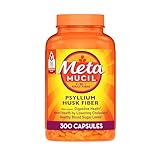
- 1. Metamucil Psyllium Husk Fiber Capsules — Best overall
- 2. NOW Foods Psyllium Husk Caps — Best budget pick
- 3. Benefiber Prebiotic Fiber Supplement Powder — Runner-up
- 4. Physician's Choice Eye Health — Best for pros
- 5. EyePromise Macular Health Eye Vitamins with Multivitamin — Best premium
- Powder or capsule: which fits your routine?
- What each price tier actually buys you
- Do you need a separate eye vitamin?
- The verdict
- FAQ
The best fiber supplement for eye health is Metamucil Psyllium Husk Fiber Capsules, a 300-count bottle built on just two ingredients that makes a daily fiber habit easy to keep. If your real goal is vision support, the Physician's Choice Eye Health formula with 20 mg lutein and 4 mg zeaxanthin is the honest pick instead. Here's the thing worth saying up front: fiber supplements and eye vitamins do two different jobs, and no single bottle in this set does both.
Best fiber supplement for eye health at a glance
| Pick | Form | Key ingredient | Price |
|---|---|---|---|
Best overall Metamucil Psyllium Husk Fiber Capsules |
300 capsules | Psyllium husk | Check Price |
Best budget pick NOW Foods Psyllium Husk Caps |
200 veg caps | Psyllium 500 mg | Check Price |
Runner-up Benefiber Prebiotic Fiber Powder |
Powder, 250 tsp | Wheat dextrin | Check Price |
Best for pros Physician's Choice Eye Health |
60 count | Lutein 20 mg claim | Check Price |
Best premium EyePromise Macular Health Multivitamin |
60 softgels | Multivitamin + eye blend | Check Price |


Why fiber and eye health don't sit in the same bottle
Amazon's search stretched to fill this query. It returned three fiber supplements and two eye vitamins, and none of the five does both jobs. That matters, because the phrase pulls together two goals that live in separate aisles.
Fiber supplements work on digestion. Psyllium husk swells in liquid, and NOW's listing claims it can expand up to 50 times its volume. Eye vitamins work on the retina, using carotenoids like lutein and zeaxanthin.
- Fiber picks here: Metamucil, NOW Foods, Benefiber
- Eye picks here: Physician's Choice, EyePromise
So the honest read is this: the modifier is only partly supported by the products in front of you. A psyllium capsule does not carry lutein. A lutein softgel does not deliver soluble fiber. You have to decide which job you're solving today, and I'll flag where each pick lands so you don't buy the wrong category by accident.
How I narrowed five listings to a shortlist
I weighted the picks against three criteria, in this order, and then checked why those three mattered for a cross-shopper landing on this query.
- What job the product does. Fiber or vision. This decided everything else, because the two do not overlap.
- Dose transparency. A listing that states its milligram figures earns trust a vague label does not.
- Cost position and routine fit. How the price sits against the rest of the set, and whether the form is easy to keep taking daily.
Weighting the job first is deliberate. If I ranked on price alone, the cheapest psyllium would top a list that a vision shopper should never buy. So I split the set into what it actually is: three fiber products led by Metamucil, two eye vitamins led by Physician's Choice. Popularity backed the fiber picks up. The three fiber bottles all sell far faster in their category than the two eye vitamins do here, which tells you where the demand sits.
1. Metamucil Psyllium Husk Fiber Capsules — Best overall
Metamucil wins the fiber side of this query on capsule count and a clean two-ingredient label.
Best for: a daily fiber habit with capsule convenience Skip it if: you want a formula built for vision
This is the best fiber supplement for eye health shoppers who are really after fiber and open to a separate eye vitamin. The bottle holds 300 capsules, the highest count of the three fiber picks here, so a single purchase stretches a long way. Metamucil's listing says the capsules use only two ingredients, with psyllium husk fiber as the active one, which is about as simple as a label gets.
The brand claims the capsules help promote regularity, support healthy blood sugar levels when taken with meals, and help lower cholesterol. Those are the manufacturer's words, not measured results, so treat them as claims to check against the label. The capsule format is the real draw. It travels well and skips the mixing step that trips up powder users.
It sits at the premium end of this set for a fiber supplement, and that's the trade-off. NOW's psyllium does the same core job for less. Metamucil buys you the higher count and the on-the-go format, not a different ingredient.
Pros:
- Highest capsule count in the set, 300
- Only two ingredients per the listing
- Capsule form travels without mixing
- Sells fastest of the fiber picks here
Cons:
- Premium price position for basic psyllium
- No eye-health ingredients at all
- Multiple capsules likely needed per dose
- Listing dose per capsule not stated
2. NOW Foods Psyllium Husk Caps — Best budget pick
NOW Foods delivers the same soluble fiber as Metamucil for the lowest cost in this set.

Best for: spending the least per capsule on psyllium Skip it if: you dislike swallowing multiple caps per dose
NOW Foods is the cheapest pick in this roundup and the direct value alternative to Metamucil. Each capsule states 500 mg of psyllium husk, and the bottle holds 200 veg capsules. That stated milligram figure is a small point in NOW's favor, since it tells you exactly what you're taking.
The listing carries a stack of certifications: Non-GMO Project Verified, Kosher, Vegan, Soy Free, made without gluten, Corn Free, and Keto Friendly. NOW also cites GMP quality assurance for its manufacturing. For a plain psyllium supplement, that's a thorough label. The company says psyllium can swell up to 50 times its volume in liquid, which is the mechanism behind soluble fiber.
Against Metamucil, the loss is count. You get 200 capsules here versus 300, so a bottle runs out sooner even though each one costs less. There's still nothing here for the eyes. This is fiber, done cheaply and cleanly, and nothing more.
Pros:
- Cheapest pick in the whole set
- States 500 mg psyllium per capsule
- Long certification list on the listing
- Vegan and gluten-free per label
Cons:
- 200 count, fewer than Metamucil's 300
- No eye-health ingredients
- Multiple capsules per serving likely
- Bottle depletes faster than the winner
3. Benefiber Prebiotic Fiber Supplement Powder — Runner-up
Benefiber is the pick for anyone who'd rather stir fiber into a drink than swallow capsules.

Best for: mixing fiber into drinks with no grit Skip it if: you avoid wheat-based ingredients
Benefiber is the only powder among the five picks, and that alone makes it worth a look for people who dislike pills. The tub weighs 1.1 lb and the listing counts 250 teaspoons, so there's a lot of doses in one container. It's unflavored, and Benefiber says it dissolves clear and completely into non-carbonated drinks and food, with no grit and no taste.
The fiber here is wheat dextrin, a plant-based prebiotic that the brand says nourishes gut bacteria. That's a different mechanism from psyllium, which is worth noting: it's still soluble fiber, but sourced differently. The listing also calls it sugar free, gluten free, and low calorie, and mentions GLP-1 fiber-gap support.
Two things push it below the psyllium picks for a fiber-first buyer. Wheat dextrin rules it out if you're avoiding wheat, despite the gluten-free claim. And a powder needs a glass and a spoon every time, which is friction the capsules avoid. Like the other fiber picks, it does nothing for vision.
Pros:
- Only powder in the set, no pills
- 250 teaspoons per tub
- Dissolves clear and taste-free per listing
- Sugar free and low calorie claim
Cons:
- Wheat dextrin base may not suit all
- Requires mixing every single dose
- No eye-health ingredients
- Different fiber type than psyllium picks
4. Physician's Choice Eye Health — Best for pros
If vision was the real goal, this lutein-and-zeaxanthin formula is the pick that actually addresses it.

Best for: lutein and zeaxanthin for the eyes specifically Skip it if: you actually wanted a fiber supplement
Let me be direct: this is not a fiber supplement. It's here because the query blends two goals, and Physician's Choice is the pick that handles the eye side properly. The bottle holds 60 count, and the listing states 20 mg lutein and 4 mg zeaxanthin in a 5:1 ratio, sourced as Lutemax.
Those are the carotenoids studied for macular support. The brand describes it as an AREDS 2 formula and says it targets eye strain, dry eyes, and blue-light exposure. It also claims third-party testing for purity and potency. All manufacturer claims, and the stated milligram figures are what let you compare it to other eye vitamins.
It sits mid-range for price in this set. The catch, if you came here for fiber, is that there's no fiber in it at all. It's the slower seller of the group too, well behind the fiber bottles. Buy it as a companion to a fiber pick, not a replacement, and you've solved both jobs with two products.
Pros:
- States 20 mg lutein, 4 mg zeaxanthin
- 5:1 ratio the brand highlights
- Third-party tested per the listing
- Mid-range price for this set
Cons:
- Contains no fiber whatsoever
- Only 60 count per bottle
- Slower seller than the fiber picks
- Eye claims are unverified marketing
5. EyePromise Macular Health Eye Vitamins with Multivitamin — Best premium
This one bundles a full multivitamin with an eye-health blend, for shoppers who want both in a single softgel.

Best for: a multivitamin bundled with eye-health ingredients Skip it if: you only want one thing done well
EyePromise is the most expensive pick here, and it's the broadest. The listing describes 60 softgels combining a full-body multivitamin with an eye-health blend. Per the brand, that means B vitamins, fish oil and Omega-3 for heart support, plus Vitamin E, Vitamin C, zinc, and biotin.
That width is the pitch. It says National Sanitation Foundation contents tested and certified, and that it's manufactured in the USA. For someone who'd otherwise buy a multivitamin and an eye supplement separately, this consolidates them. The listing doesn't state the lutein or zeaxanthin milligram figures the way Physician's Choice does, so the eye dose is harder to pin down.
It's the slowest seller in the set by a wide margin, and it carries the highest price. Like both eye picks, it holds no fiber. The trade-off is focus: a bundle spreads its formula across many jobs, so if your priority is a strong, transparent eye dose, the Physician's Choice pick names its numbers and this one doesn't.
Pros:
- Multivitamin plus eye blend in one
- NSF tested and certified per listing
- Covers heart, immune, hair claims too
- Made in the USA per the brand
Cons:
- Highest price in the set
- Eye carotenoid doses not stated
- Slowest seller of all five picks
- No fiber, despite the query
Powder or capsule: which fits your routine?
Form decides whether you'll actually stick with a fiber supplement, so it's worth thinking through before you buy.
- Capsules (Metamucil, NOW Foods): grab and swallow, no prep, easy to travel with. The downside is you may need several capsules to hit a full dose, and swallowing multiples isn't for everyone.
- Powder (Benefiber): mixes into water, coffee, or food, and Benefiber says it dissolves clear with no grit. The downside is friction. You need a glass and a spoon every time, which is the reason powders get abandoned in the back of a cupboard.
The eye picks are both softgels or capsules, so form is simpler there. In practice, pick capsules if your day is busy and mobile, and pick powder if you already drink something at a set time each day and can anchor the dose to it. The best form is the one you'll take without thinking about it.
What each price tier actually buys you
Money buys count and breadth in this set, not a better core ingredient. Here's the map, described without figures.
- Entry tier: NOW Foods and Benefiber sit at the bottom. NOW gives you the cheapest psyllium with a stated 500 mg dose. Benefiber gives you a large 1.1 lb powder tub with 250 teaspoons.
- Mid tier: Physician's Choice lands in the middle, and it's the transparent eye pick, naming 20 mg lutein and 4 mg zeaxanthin.
- Premium tier: Metamucil and EyePromise. Metamucil's premium position buys the 300-capsule count and a name-brand two-ingredient label, not a different fiber. EyePromise, the priciest, buys breadth: a multivitamin bundled with an eye blend.
The lesson is simple. For plain psyllium, spending more mainly buys you more capsules per bottle. For eye vitamins, spending more can buy either dose transparency or a wider multivitamin, and those are different things.
Do you need a separate eye vitamin?
You need a separate eye vitamin if vision support is a real goal, because not one fiber supplement here contains lutein, zeaxanthin, or any carotenoid. That's the whole point of splitting this set. Psyllium and wheat dextrin work on digestion; they do nothing for the retina.
If you want both, the clean approach is two products: a fiber pick for regularity and one of the eye vitamins for the vision side. Physician's Choice states its carotenoid doses, so it's the easier one to judge. Don't expect a fiber capsule to double as an eye supplement, and don't buy an eye vitamin expecting fiber.
The verdict
The best fiber supplement for eye health, judged on the fiber side of this blended query, is Metamucil Psyllium Husk Fiber Capsules. It wins on the strongest fiber-specific measure in the set: 300 capsules, the highest count here, built on a two-ingredient label. It's the fastest-selling fiber pick too, which tells you where shoppers land.
Two conditions flip that call. First, if you're avoiding capsules, Benefiber's powder is the better routine fit, with 250 teaspoons per tub and a mix-in format that dissolves clear. Second, if price is the deciding factor, NOW Foods does the same psyllium job for the least money, stating 500 mg per capsule.
And the honest caveat that runs through this whole set: if your true goal is vision, none of the fiber picks touch it. Physician's Choice is the pick that names real eye-health doses, 20 mg lutein and 4 mg zeaxanthin, and it's the runner-up's exact advantage over every fiber bottle here. The cleanest answer for most people cross-shopping this query is Metamucil for fiber plus a dedicated eye vitamin, run as two products rather than one compromised bottle.
FAQ
Is a fiber supplement worth it for eye health?
A fiber supplement is worth it for digestion and regularity, but not for eye health directly. None of the fiber picks in this set, including Metamucil and NOW Foods, contain lutein or zeaxanthin. If vision is your goal, pair a fiber supplement with a dedicated eye vitamin like Physician's Choice, which states 20 mg lutein.
Which is the best value fiber pick in this roundup?
The best value fiber pick is NOW Foods Psyllium Husk Caps, the cheapest supplement in this set. It states 500 mg of psyllium per capsule across 200 veg capsules and carries a long certification list, including Non-GMO Project Verified and Vegan. It does the same core job as pricier psyllium for less money.
What is the difference between Metamucil and Benefiber?
The difference between Metamucil and Benefiber is form and fiber source. Metamucil is 300 psyllium husk capsules you swallow. Benefiber is an unflavored powder, 250 teaspoons, made with wheat dextrin that the brand says dissolves clear into drinks. Pick Metamucil for pill convenience, Benefiber for mixing into a beverage.
Does Metamucil help with regularity and blood sugar?
Metamucil's listing claims it helps promote regularity, supports healthy blood sugar levels when taken with meals, and helps lower cholesterol. Those are the manufacturer's stated claims rather than measured outcomes, so check them against the label. The active ingredient is psyllium husk fiber, and the capsules use only two ingredients per the listing.
What should I avoid when buying a fiber supplement?
When buying a fiber supplement, avoid assuming it doubles as an eye vitamin. It won't. Also check the fiber source: Benefiber uses wheat dextrin, which matters if you avoid wheat, even though the listing calls it gluten free. And watch dose count. Metamucil's 300 capsules outlast NOW's 200 for a longer supply.
Your next step is to decide which job you're solving. If it's regularity, start with Metamucil for the capsule convenience and the 300-count supply, or drop to NOW Foods to spend less on the same psyllium. If your day suits mixing a drink, Benefiber's powder fits better. Then, if vision matters too, add Physician's Choice as a second product and read its stated 20 mg lutein figure against any eye vitamin you compare. Metamucil earns the default spot because it makes the fiber habit effortless, and an easy habit is the one you actually keep.